Our approach

Two approaches, one commitment to the child.

Children’s Town Playcare Center is rooted in play-based learning inspired by How Does Learning Happen? At Children’s City School, families choose between that same play-based philosophy and a Montessori classroom. Both share the same safety, nutrition and educator standards.

Preschool child painting at an easel while natural light fills the studio corner
Play-Based Learning

Learning that looks like play, planned like teaching.

Found at Children’s Town Playcare Center and offered as one path at Children’s City School, our play-based programming follows Ontario’s pedagogy for the early years. Educators observe, document and then design the next invitation — which is why two weeks in the same room never look identical.

Educator sitting on the floor reading with two toddlers during a play-based morning
01

Belonging

Every child has a place, a photo on the wall and an educator who knows their story. Settling in is treated as its own curriculum.

02

Engagement

Children choose their work. Educators watch closely, then extend interests into longer inquiries with real materials.

03

Well-being

Sleep, food, movement and emotional regulation come first. Self-regulation is taught, not demanded.

04

Expression

Drawing, clay, music, building and dramatic play are treated as languages children think in, not crafts to take home.

PlayExplorationRelationshipsBelongingWell-beingEngagementExpressionHands-on experiencesLearning through everyday experiences
Montessori Learning

A prepared environment for focused, self-directed learning.

Available at Children’s City School, Montessori education gives children the freedom to choose their work within a carefully prepared environment. The result is deep concentration, intrinsic motivation and a strong sense of personal responsibility.
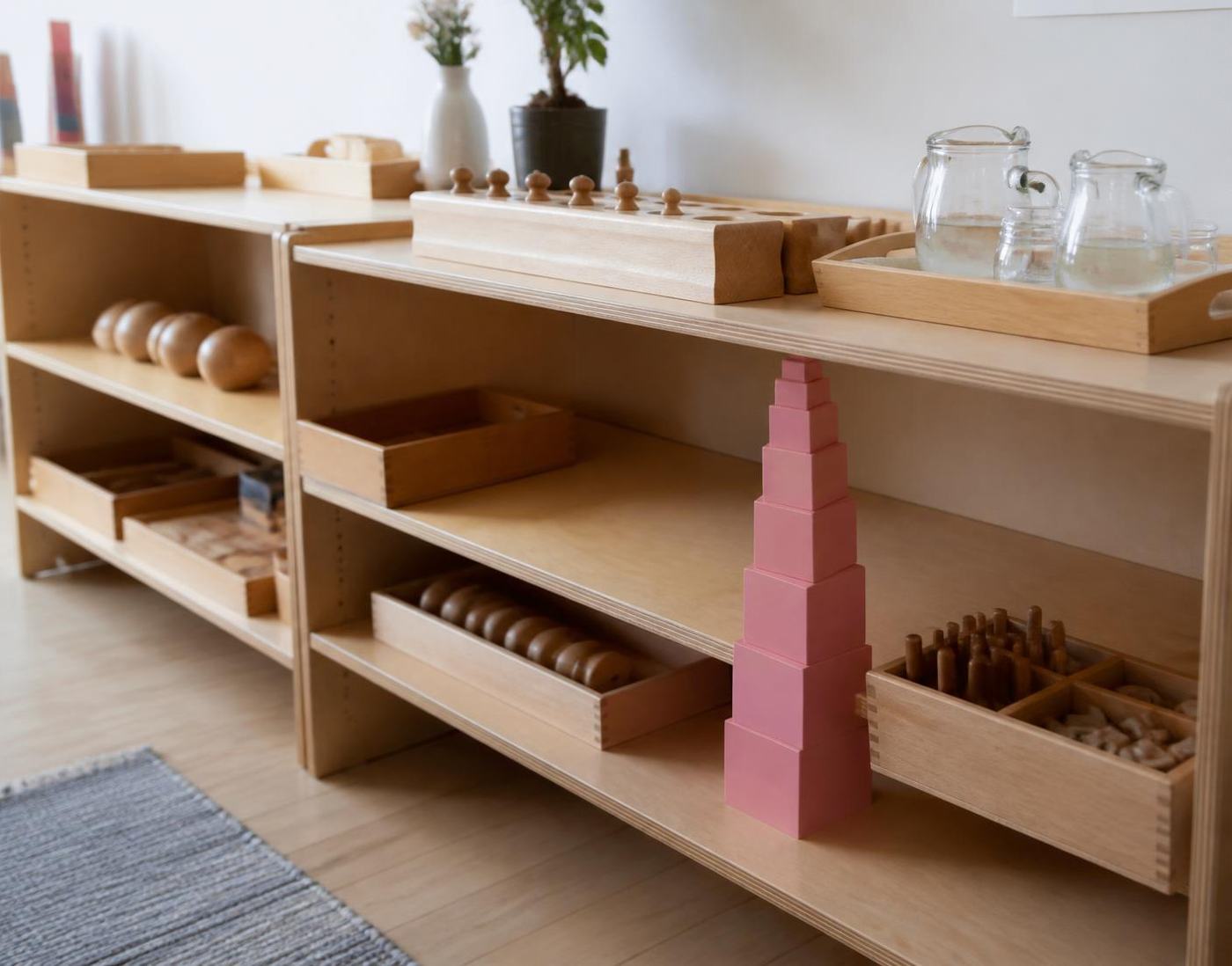
Low wooden Montessori shelves holding the pink tower, cylinder blocks and glass pouring pitchers
01

Independence

Children choose their own activities, pour their own snacks and dress themselves. Confidence grows from real competence.

02

Hands-on materials

Specialized Montessori materials make abstract concepts concrete — from counting beads to sandpaper letters.

03

Mixed-age community

Younger children learn from older peers; older children solidify mastery by helping and modelling.

04

Respect for the child

Uninterrupted work periods honour concentration. The educator guides, observes and follows each child's developmental rhythm.

Compare

Which approach fits your child?

Feature
Play-Based
Montessori
Classroom flow
Flexible, group projects and imaginative play
Uninterrupted work periods, individual choice
Teacher role
Co-learner, facilitator and documenter
Guide, observer and preparer of environment
Materials
Open-ended loose parts, art, sensory and natural items
Specialized, self-correcting Montessori materials
Social structure
Same-age rooms with strong group community
Mixed-age classrooms with peer mentoring
Learning driver
Children’s emerging interests and play
Child’s choice within a prepared curriculum
Readiness goal
Confident, curious, socially capable learners
Independent, focused, self-regulated learners

Both approaches lead to the same outcome: a child who is ready for kindergarten, confident in relationships, and excited to learn. During your tour we’ll help you decide which classroom style matches your child’s temperament and your family values.

Safety & licensing

The standards we’d want as parents ourselves.

Both centres operate in accordance with Ontario’s Child Care and Early Years Act. Current licences, inspection summaries and policy binders are available at the front desk of each centre — ask to see them on your tour.

Staff Screening & Qualifications

  • All staff complete a Vulnerable Sector Police Record Check.
  • Staff provide required immunization records and TB screening/testing, as applicable.
  • Registered Early Childhood Educators are registered and in good standing with the College of Early Childhood Educators (CECE).
  • Staff meet all applicable Ministry of Education and child-care licensing requirements before working with children.

Allergy & Emergency Response

  • Up-to-date allergy and medical information is maintained for each child.
  • Individual allergy and emergency plans are followed as required.
  • Staff are trained to respond to medical and emergency situations.
  • Emergency contact information is kept current for every child.
  • Staff follow the centre's emergency procedures and applicable Ministry of Education requirements.
  • Children with allergies or medical needs are closely monitored, and prescribed emergency medication is handled according to the child's individual plan and centre procedures.

Health, Hygiene & Medication

  • Established health, hygiene, cleaning and sanitization procedures maintain a safe and healthy environment for children and staff.
  • Our illness policy is provided to families in writing and outlines when children should remain home and when they may return to care.
  • Medication is administered only in accordance with our medication administration policy and required parent/guardian authorization.
  • Medication administration records are maintained when medication is given.
  • Staff follow applicable public-health and Ministry of Education requirements regarding illness, hygiene, cleaning and infection prevention.

Emergency Preparedness & Drills

  • Emergency drills are conducted regularly in accordance with applicable child-care licensing requirements.
  • Staff and children are familiarized with emergency procedures appropriate to their age and developmental abilities.
  • Emergency drill records and results are maintained by the centre and reviewed as required.
  • Emergency procedures are posted in designated areas throughout the centre.

See both approaches in action, meet the educators, ask hard questions.

We schedule tours during program hours on purpose — you should see a normal day, not a staged one.

Book a Tour